2,900
Hospitality closures in a year
Across New Zealand in the past year, up almost 40% on the year before.

New stores · Upgrades · NZ hospitality
AI and a smart kitchen help a new takeaway handle the rush, offer something new, survive the first year and keep more of the profit. The example is a Fish & Chips shop; the same plan fits Chinese takeaways, quick-service and casual eateries, new or refitted.
Why new stores struggle
Customers arrive at lunch and dinner, but rent and wages run all day. With the same rent and the same team, how many orders you can take at peak, and how consistently you serve them, decides whether a new store makes it through year one.
2,900
Across New Zealand in the past year, up almost 40% on the year before.
+143%
Over the same period, restaurant liquidations rose 43% and cafés 27%.
$23.95
From 1 April 2026. Rent is still due every month.
Sources: Centrix data reported by 1News, 1 September 2026; Employment New Zealand for the minimum wage.
The plan on one page
Help local customers and AI assistants find you. Kiosk, QR code, website and AI-assisted orders arrive in one order desk, with no platform commission on your own channels.
Stir-fry robots cook to order, steaming equipment handles lighter meals, and AI reads every allergy and dietary note. Shorter waits and more consistent food.
Machines and AI take the repetitive work, so your team focuses on serving, packing and looking after customers at meal times.
The result: you handle the rush, food comes out consistent, customised healthy meals give people a reason to visit, and the store keeps more of what it earns.
From order to pickup
A customer orders at the kiosk and ticks less oil and less salt. The order reaches the counter and the kitchen screen at the same time, the kitchen screen assigns it to a free machine, and cooking starts only after a staff member loads and confirms.
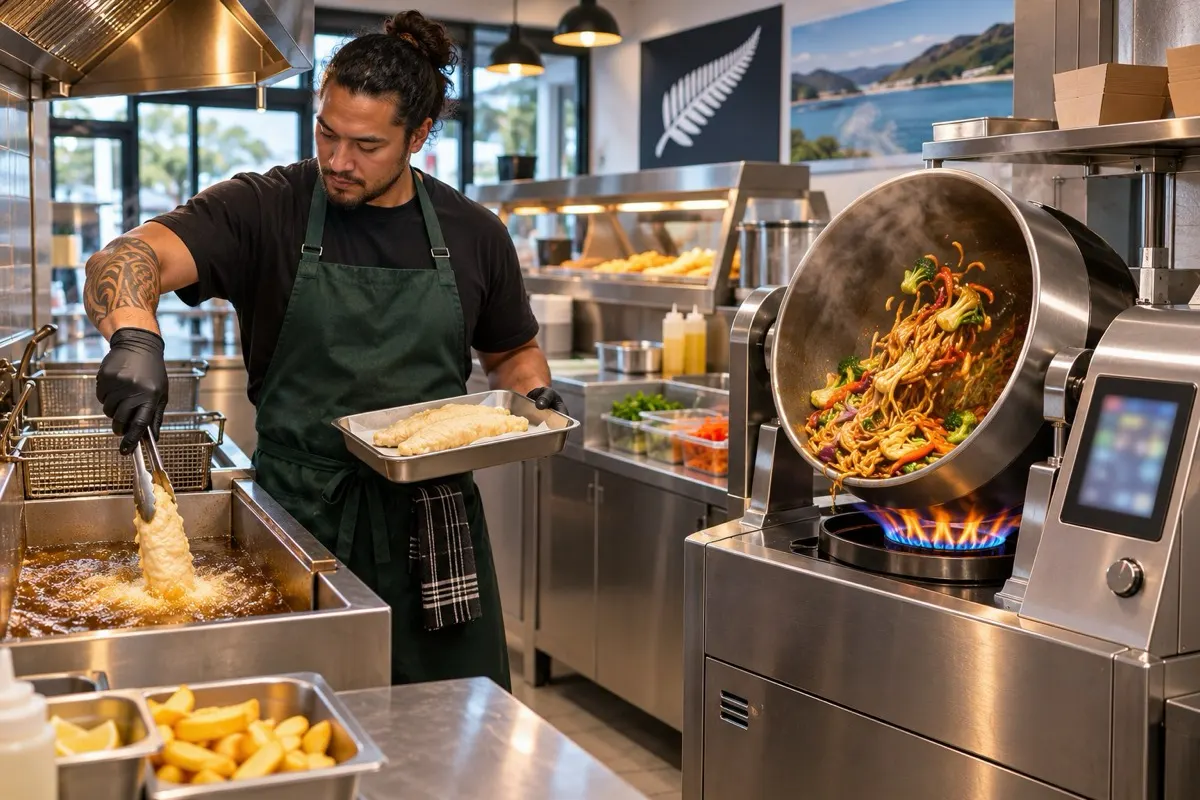
The customer chooses at the kiosk, by QR code or online, adds options such as less oil or less salt, and submits.
The order reaches the counter and the kitchen screen together over the store network. Nobody re-keys it.
The kitchen screen checks each machine. Stir-fry goes to a free wok machine, steamed meals to suitable steaming equipment.
The machine's screen alerts a new order. Staff prepare and load the ingredients, then confirm to start.
The drum keeps turning with controlled heat and a standard recipe, applying less oil or less salt as ordered.
The machine signals the dish is ready. Staff plate or pack it and call the order.
A new selling point
Less oil, less salt, choose your greens and sauce, steamed salmon or steamed chicken. In a busy manual kitchen it is hard to adjust every order at peak. Machines follow the selected options, however many orders come in.
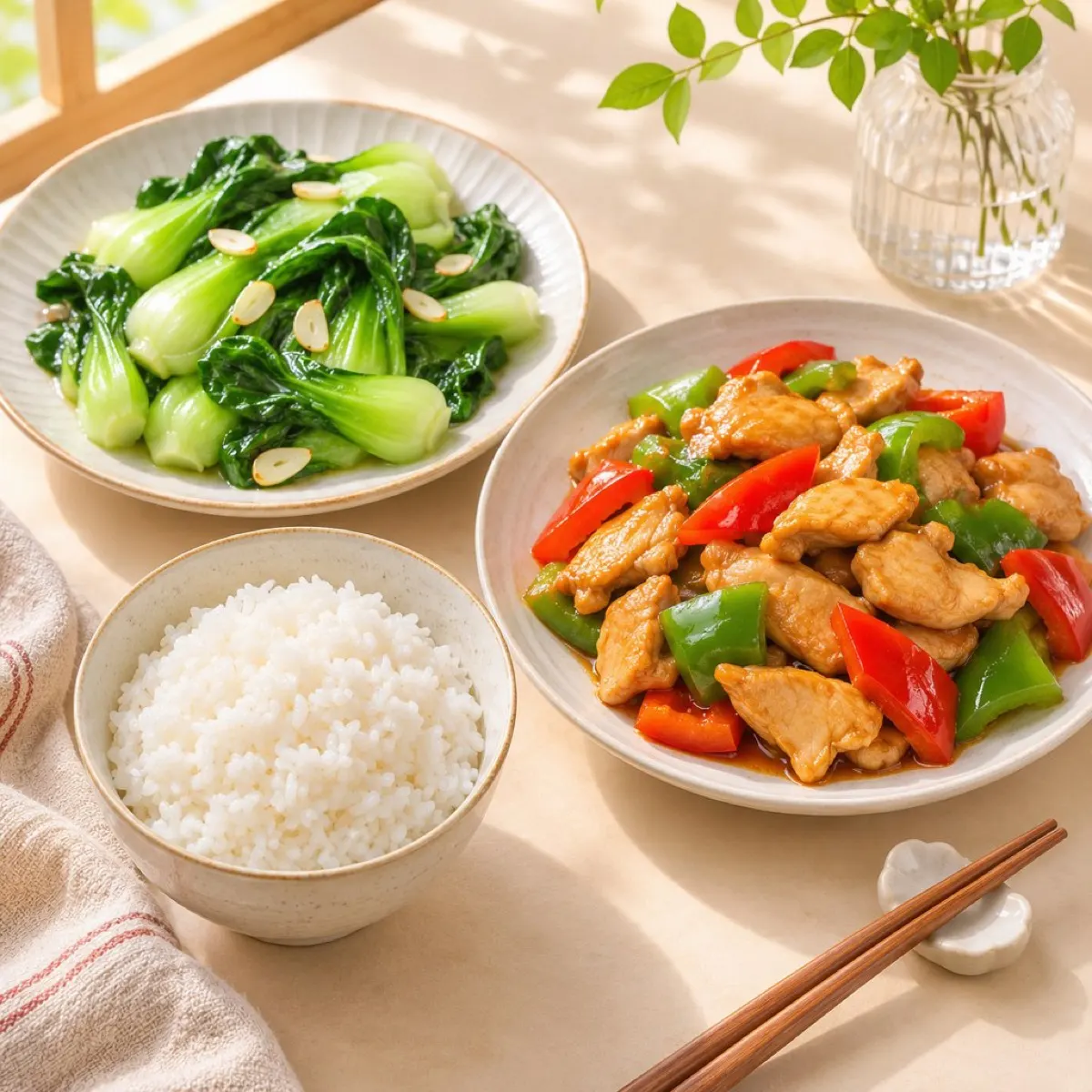
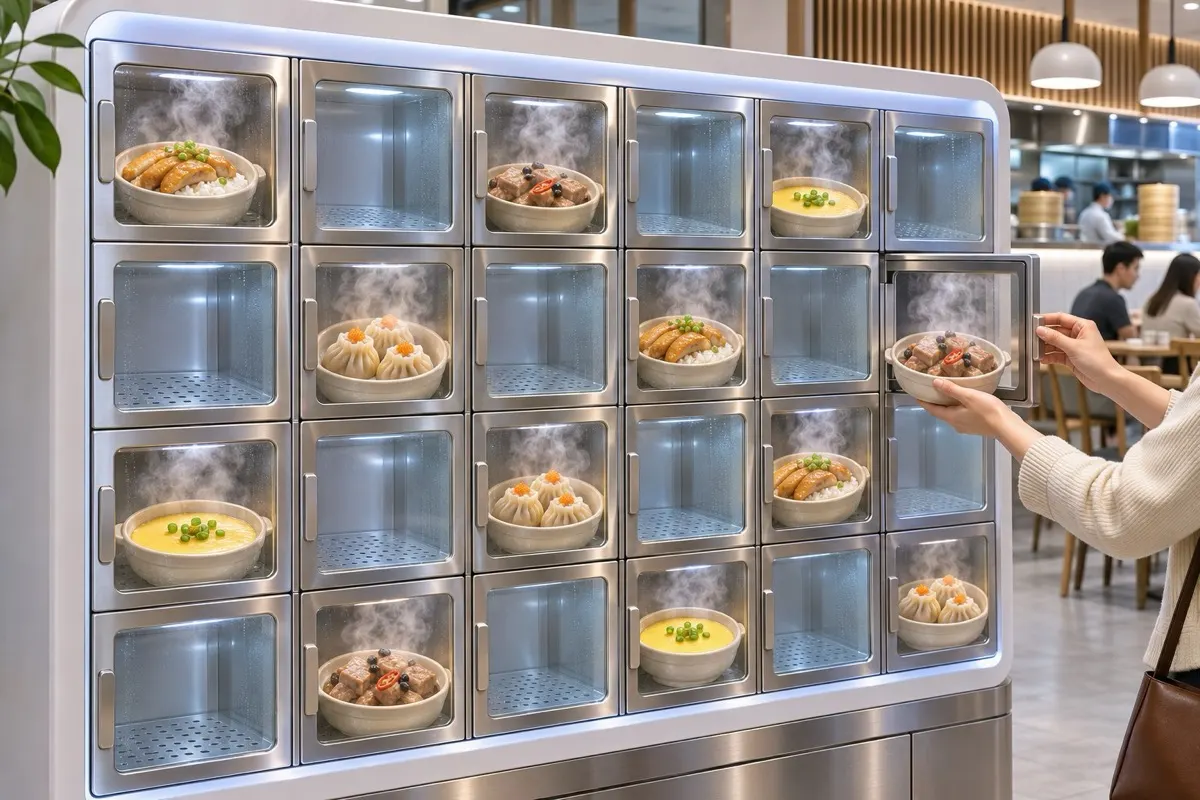
Healthy becomes an option customers can actually order. Custom options can carry a surcharge.
People who want to eat well and like building their own meal get a reason to choose your shop.
The stir-fry robot handles quick wok dishes and steaming equipment handles light meals, for a broader menu and faster service.
Source: Yuan et al., 2009, Journal of Zhejiang University Science B. The study measured broccoli only and does not apply to every ingredient.
AI reads the notes
At peak, dozens of orders are cooking at once, and a missed allergy note is the worst mistake. When a customer types a note at the kiosk, AI extracts the key points and highlights the allergen. The chef confirms before cooking starts.
“I’m allergic to peanuts. No spring onion, less salt, sauce on the side please!”
Chef confirms, then cooking starts
Allergen names follow the FSANZ PEAL requirements (Standard 1.2.3 / Schedule 9). AI flags are a visual reminder and the chef makes the final check. They do not replace the store's allergen management process.
Staff where the rush is
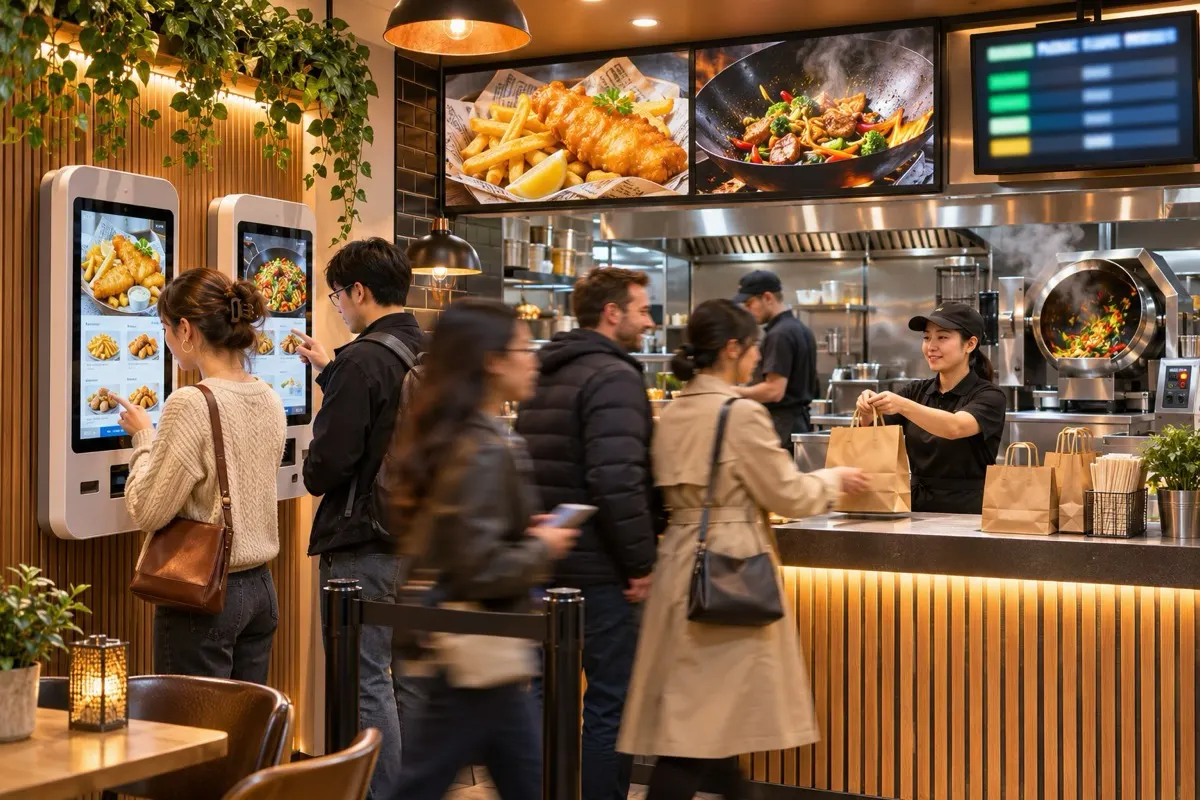
Machines & AIThe AI assistant posts today's special; steaming bowls are portioned; machines load recipes
Your teamPrep, cutting and checking ingredients
Machines & AIKiosk, website and AI take orders; machines cook each order
Your teamRestocking, quality checks, dine-in guests
Machines & AIOrders arrive from several channels; machines cook in parallel; allergies show on screen
Your teamServing, packing and looking after customers
AI marketing
Your menu and opening information are published as text AI assistants can read. When someone asks an AI where to eat nearby, it can find you and help place an order through a supported ordering entry. Your website receives the order automatically.
Take a photo of a dish and tell the AI, “make this today's special”. The website, kiosk and digital menu board update together.
Your Google Business Profile, Instagram and the QR code on your takeaway bags lead straight to your own ordering website, with no platform commission.
Will locals like it?
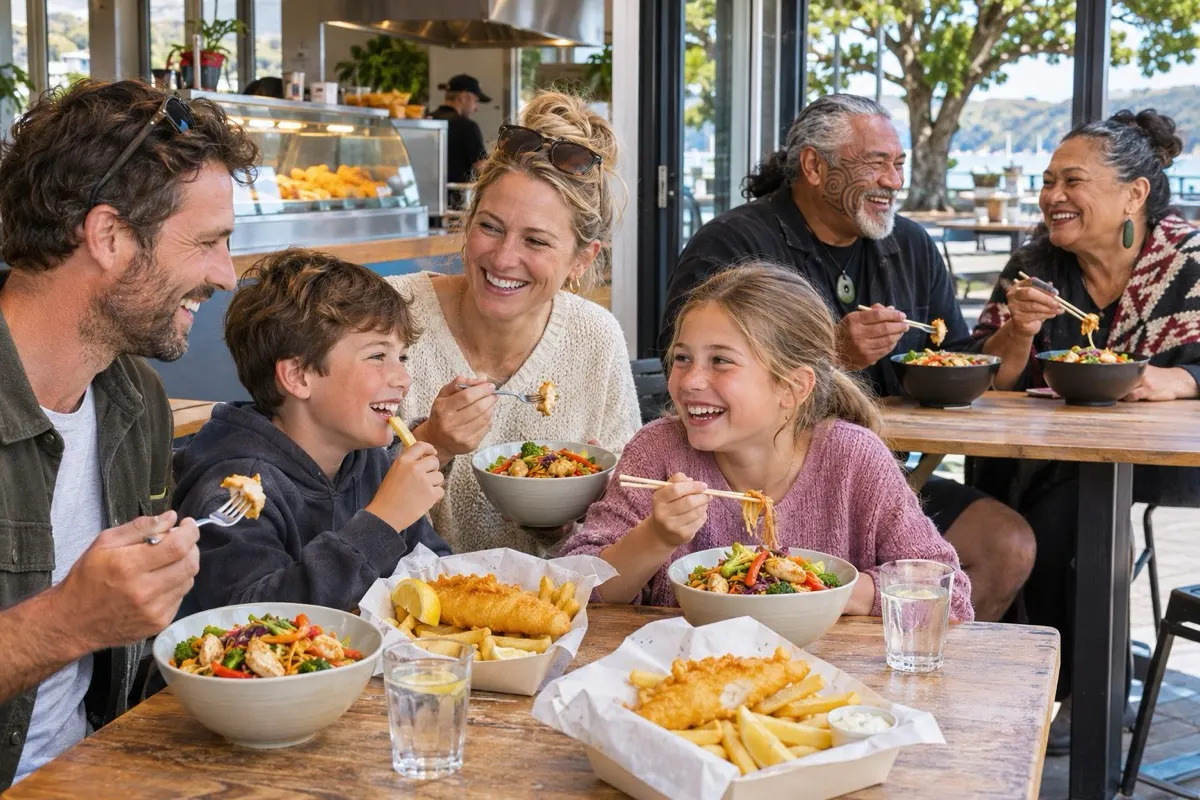
Since the 1940s, Chinese families have run fish and chip shops, adding chow mein, fried rice and wontons to the menu. “Fish & Chips + Chinese Takeaway” is a familiar sign across the country. The same familiar food, now served faster and more consistently.
Sources: theancientmariner.co.nz; Wikipedia: New Zealand Chinese cuisine.
Where the profit comes from
Several ordering channels and machines cooking in parallel lift meal-time sales, so turnover keeps up with the rent.
Standard recipes mean the same heat and portions every time, whoever is on shift, so customers come back.
Less oil, less salt and build-your-own options attract new customers, and custom options can carry a surcharge.
Regulars order on your website and kiosk, so platforms do not take a cut.
How we build it with you
Design the menu for your format and turn dishes into recipes machines can follow.
Website, Google Business Profile and AI-friendly content, so you are found before you open.
Kiosk, tablets, receipt printer, stir-fry robot, steaming equipment and fryers.
Ordering, AI note reading, kitchen screen and machines, and order calling.
Tune recipe settings and rehearse the meal-time rush with real customers.
The AI assistant posts daily specials, reviews come back and regulars reorder.
Already trading? You do not need to change everything at once. Start with self-ordering and AI marketing, then add stir-fry and steaming equipment dish by dish.
This page describes a target plan for future stores. Automatic kitchen assignment, machine alerts, AI-assisted ordering and multi-screen menu sync are custom-built and accepted item by item, based on the actual equipment interfaces, AI service support and integration results. It does not mean these systems are already fully connected in any store. Equipment models and New Zealand electrical compliance are confirmed for each project. Scene images on this page are AI-generated illustrations.
Fish & Chips, Chinese takeaway, quick-service or casual dining. From AI marketing to the smart kitchen, we plan it with you.